
Illustrated by Copywriters

Sometimes it's nice when an art director can write. Sometimes it's nice when a writer can draw. A lot of writers can draw. Not all, but some.
If you're a writer, and you've ever doodled anything, good or bad, please consider submitting it to Illustrated by Copywriters. It's a little side project I'm working on.
Thanks.
Performing is investing is selling
Recently, Jim was writing about audiobooks, and it got me thinking.
A few years ago, I listened to Tom Wolfe's book, A Man in Full on tape. (Yes, cassette tape.) It was read by David Ogden Stiers. Great actor. Great book. But having him read it to me was a little dull. As Jim wrote, it kind of felt like cheating to be listening instead of reading.
Last week, I finished listening to another audiobook. This one was The Goal by Eliyahu Goldratt. A cast of actors performed for about 10 different characters. The production was complete with Foley effects from background music on the radio to doors slamming. When someone was on the phone, they sounded fuzzy. When they were in the other room, they sounded distant. When they interrupted each other, you actually heard. It less of an audiobook and more of a radio play. They weren't the best troupe of actors, but the whole experience was far superior to famous Steirs reading famous Wolfe.
The Tom Wolfe book is like the creative team that says, “This idea is so good, it speaks for itself. Feast your eyes on this brilliance.” No one’s questioning the talent or the substance. But outside of the creative team, no one’s really invested in it either.
The Goldratt production was the creative team who took a great idea, sold it, and got it produced.
(In Tom Wolfe's defense, the jacket design for A Man in Full - and just about anything else - beats the cover of the Goldratt book.)
Quotes I found in a cook book, part 2: Enthusiasm in a brave new world
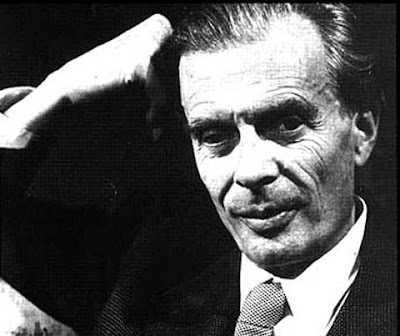
The secret of genius is to carry the spirit of the child into old age, which means never losing your enthusiasm.
-Aldous Huxley
Quotes I found in a cook book, part 1

The creation of something new is not accomplished by the intellect but by the play instinct acting from inner necessity. The creative mind plays with the objects it loves.
-Carl Jung
John Stewart on It Getting Easier
This is from "What Makes People Laugh," an interview by Carl Arnheiter with Jon Stewart. It appears in the book Rejected: Tales of the Failed, Dumped and Canceled, by Jon Friedman.
What's your take on building a joke, how does it start for you?
Jon Stewart: It's 99% perspiration and 1% love and all that...I think it's just one of those things you learn from doing it, and you know, the funny thing is even though I know how to do it in that yeoman sort of way, there is no "oh now I got it and so it now pours out." But it still takes as much effort and all that, I can do it a little quicker than I used to be able to, but the great stuff still comes in the same percentage that it ever came.
What's your take on building a joke, how does it start for you?
Jon Stewart: It's 99% perspiration and 1% love and all that...I think it's just one of those things you learn from doing it, and you know, the funny thing is even though I know how to do it in that yeoman sort of way, there is no "oh now I got it and so it now pours out." But it still takes as much effort and all that, I can do it a little quicker than I used to be able to, but the great stuff still comes in the same percentage that it ever came.
Language and Framing II
A while back, I wrote a post about the importance of language and framing, about how small changes in language can compel us to make larger shifts in the way we think about something.
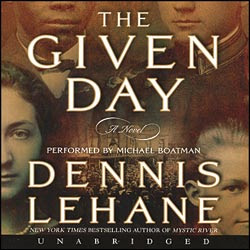
I've recently gotten hooked on listening to audiobooks. I love them because they allow me to "read" while I'm driving or working in my yard. The other day, I noticed something: rather than a "Read by..." credit on the cover of the audiobook, it said "Performed by..."
I used to consider audiobooks a form of cheating. Someone was reading the book to me instead of me doing the work. It felt kind of lazy. I imagine this is one of the big hurdles for the audio book industry.
But "Performed by" frames the audiobook in a way that gets me over this hurdle. I'm not just having it read to me, I'm taking in a performance. It's as different as a play or a film. In this case, they hired actor Michael Boatman, who reads the narration and acts out the parts, giving voices to all the characters. It's a true performance. It changes how I think about the form and how I enjoy it.
In addition to how we frame things in the work we produce, the words we use to present it, particularly to our clients, can make a big difference.
We might think something is "cool," but a client might be more interested in hearing that it's "relevant to the target." Same meaning, different language. Is an idea "weird" or is it "breakthrough?" Is a design "clean," or does it "communicate more clearly?"
If someone had told me this when I was a student, I would have said, "Whatever. I want to sell my work on the strength of the ideas, man." I had much to learn.
I've recently gotten hooked on listening to audiobooks. I love them because they allow me to "read" while I'm driving or working in my yard. The other day, I noticed something: rather than a "Read by..." credit on the cover of the audiobook, it said "Performed by..."

I used to consider audiobooks a form of cheating. Someone was reading the book to me instead of me doing the work. It felt kind of lazy. I imagine this is one of the big hurdles for the audio book industry.
But "Performed by" frames the audiobook in a way that gets me over this hurdle. I'm not just having it read to me, I'm taking in a performance. It's as different as a play or a film. In this case, they hired actor Michael Boatman, who reads the narration and acts out the parts, giving voices to all the characters. It's a true performance. It changes how I think about the form and how I enjoy it.
In addition to how we frame things in the work we produce, the words we use to present it, particularly to our clients, can make a big difference.
We might think something is "cool," but a client might be more interested in hearing that it's "relevant to the target." Same meaning, different language. Is an idea "weird" or is it "breakthrough?" Is a design "clean," or does it "communicate more clearly?"
If someone had told me this when I was a student, I would have said, "Whatever. I want to sell my work on the strength of the ideas, man." I had much to learn.
Seth Godin on Quieting the Lizard Brain
You already know this stuff. But it's always good to hear again.
Defining Success
I don't usually link to Alex Bogusky's blog, because I assume most of you are reading it anyway.
But this post for students has to be mentioned. It's all true. And not just because Alex says so.
Subscribe to:
Posts (Atom)