Some good advice from a couple creatives I really respect.

Showing posts with label side projects. Show all posts
Showing posts with label side projects. Show all posts
"Inflatable Trans Ams and Stained Glass Backboards" or "Have An Idea That Forces You To Learn Something New"
I love to see side projects in someone's portfolio. Granted, they need to be interesting and well-done too. Bad poetry doesn't score many points. But good side projects show what you're capable of with no restraints. How far you'll go to make something cool. How big of an itch you have to just create something new in the world.
About six months ago, we hired this guy. His name is Guy. He's a great advertising creative, but beyond that he has a whole life as an artist. He has two portfolios, one for advertising and one for his art. Here's his art portfolio. For the inflatable Trans Am idea, he had no idea how to make inflatables. He just had the idea, then he started calling people to figure out how to make it happen. The end result is pretty bad-ass.
 |
| Guy Overfelt, untitled (his 1977 Smokey and The Bandit Trans AM as an inflatable) 1999, 2009 inflatable nylon and electric blower 54H X 204L X 84W inches |
Another friend of mine recently started a side project (obsession) that required him to learn a new craft of his own. His name is Victor Solomon. I know him because he used to do some freelance editing and the occasional shooting for us. He had an idea to do basketball backboards made out of stained glass. A comment on the deification of athletes, the spiritual nature of sport, something like that.

When he had this idea, he knew absolutely nothing about stained glass other than that he liked how it looked. So he did some research and did an apprenticeship with some master stained glass dudes down in San Jose. It takes him around 100 hours to make a backboard, but man are these things cool. And as he's just starting out, his craft is only going to get better.
See more of his backboards at literallyballin.com.
Ideas are a dime a dozen. The only ideas that matter are the ones you care about enough to actually bring into the world. Pick the hard ones--the ones that you don't know how to make. Let your passion to see it realized be your fuel. Make yourself learn something. In the end, you'll have created something in the world and in yourself.
Nate Archambault on Side Projects
Our friend and frequent contributor Nate Archambault has a great piece on Medium.com on the importance of side projects. Check it out here.

[You can check out Nate's advertising blog at maybegravy.com and follow him on Twitter at @nkarch.]
[You can check out Nate's advertising blog at maybegravy.com and follow him on Twitter at @nkarch.]
Side Project: yearbnb
My friend and former boss Kevin Lynch is currently the executive creative director of BBDO South China. Here's his pecha kucha presentation of a full-time side project: using airbnb to stay in different rooms throughout Hong Kong for a full year.
Yearbnb at Pecha Kucha from fifteen ideas on Vimeo.
Yearbnb at Pecha Kucha from fifteen ideas on Vimeo.
Some Work is More Important

My buddy Jon, who has worked on some of the best brands in the world and done some great, award-winning work, has been creating short films for things he's passionate about for the past couple years. They're not really "side projects" anymore, though they started out that way. He learned by watching people work, then messing around himself.
His latest is a short film to help a young boy who was born with all kinds of health issues. Give it a watch. Sharing it helps.
You can watch it here.
Advice from Maria
If you’re a student putting your book together, here’s some
advice from Maria Scileppi, director of 72U:
Lead with personal projects. That’s what people really want
to see; how you’re thinking, how you’re solving problems, how you see the
world. Show the process if you can. And then
have three or four campaigns to show that you can blow out an idea. But personal
projects are a must, and I would lead with that. That’s how people get hired. Agencies
want to see that you can make advertising. But what gets you hired is the
personal project, because it resonates with us. It’s contributing to the
culture. It’s not just giving a message. It’s being relevant in culture. And
that’s what advertising wants to do. That’s what brands want to do. That’s why
we connect more to these personal projects. They’re a reaction to the world we
live in.
Chicago Haiku
On this site, we love bragging about other people's side projects. So forgive me while I brag about this one.
Chicago Haiku is a short collection of poetry about the Windy City. If you're from there, you'll understand. To read Jim's review, click here. To preview or order a copy, click here. I hope you enjoy it.
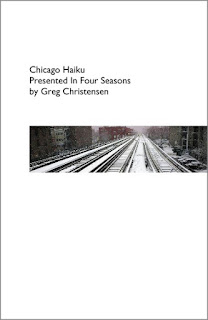
Chicago Haiku is a short collection of poetry about the Windy City. If you're from there, you'll understand. To read Jim's review, click here. To preview or order a copy, click here. I hope you enjoy it.

Client Feedback
As we've said before, one of the myths in the industry is that the client is stupid. Thinking like that won't help you do or sell better work. Don't believe it.
But then there's this brilliant side project we found that beautifully illustrates client feedback. And we remember we've been in meetings like this, too.


But then there's this brilliant side project we found that beautifully illustrates client feedback. And we remember we've been in meetings like this, too.


Awesome or Awful
Check out Awesome or Awful: A Self-Critique Tool for Young Creatives. Wish I'd had this around when I was first in portfolio school.

One of the authors is Erin Eby, a super-talented art director who helps run an agency in Geneva, Switzerland. I had the pleasure of working with her when I lived there, and we collaborated on a number of projects. I kind of wish this would have been one of them.
Stately Sandwiches
Kelly Pratt is a recent graduate of the Chicago Portfolio School. Because she likes sandwiches as much as she likes advertising, she's got a side project called Stately Sandwiches. Check it out. Bring your own chips.


Amateur Creativity
This is a presentation I gave to the Chicago Portfolio School last month.
I shortened the 45-minute presentation to about 12 minutes, so I had to cut out some of the showcase pieces.
I also had to rerecord my voice. I swear I sound much better live.
Please send any feedback on how I could improve this presentation to the comments section below.
The Maker Generation
Last week, I was able to catch up with my friend, mentor and first boss Kevin Lynch. Over lunch he said a few things worth sharing here. Paraphrasing, of course. My hands were too busy with my pulled pork sandwich to take notes.
According to Kevin, you portfolio students and recent grads are the Maker Generation. When Kevin or I were looking for our first jobs, if we wanted to pull something real together, we would have had to find a typesetter, a photographer, maybe a sound engineer. Nothing got produced that didn't involve a team.
But today, people are producing work all the time with nothing more than a great idea and maybe a little tech shrewdness. I go to portfolio school reviews each year and more and more, there are students developing their own apps, fonts, websites, radio programs. It's not just theory.

Kevin said this democratization of maker-iness means there's no reason any portfolio school grad should go into a job interview where the person interviewing hasn't already heard of them.
That's a pretty high bar. Thing is, there are plenty of examples out there where portfolio school students (your competition) are already clearing it.
According to Kevin, you portfolio students and recent grads are the Maker Generation. When Kevin or I were looking for our first jobs, if we wanted to pull something real together, we would have had to find a typesetter, a photographer, maybe a sound engineer. Nothing got produced that didn't involve a team.
But today, people are producing work all the time with nothing more than a great idea and maybe a little tech shrewdness. I go to portfolio school reviews each year and more and more, there are students developing their own apps, fonts, websites, radio programs. It's not just theory.

Kevin said this democratization of maker-iness means there's no reason any portfolio school grad should go into a job interview where the person interviewing hasn't already heard of them.
That's a pretty high bar. Thing is, there are plenty of examples out there where portfolio school students (your competition) are already clearing it.
Scanwiches
This has nothing to do with ads. But we're always fans of side projects.
I first heard about Jon Chonko's project, Scanwiches a few years ago. But only recently did I hear his interview on NPR's Marketplace with Kai Ryssdal and find out that he'd turned Scanwiches into a book.

Just a nice example of a side-project that built momentum over the years.
I first heard about Jon Chonko's project, Scanwiches a few years ago. But only recently did I hear his interview on NPR's Marketplace with Kai Ryssdal and find out that he'd turned Scanwiches into a book.

Just a nice example of a side-project that built momentum over the years.
The Creative Ham
 Here's something I wish I'd had when I was graduating from portfolio school. It's a site called The Creative Ham, which is a working list of ad agencies by city. Everyone knows Goodby's in San Francisco and Wieden's in Portland. But if you really, really want to work in Denver or Philadelphia or Houston, their Forever Incomplete List of Agencies will give you a good start. There are great shops everywhere.
The Creative Ham was designed by Alex, a portfolio student about to graduate from The Book Shop. High-fives to Alex.

The Importance of Hobbies
This guest post was written by Erin Eby, art director and co-founder of Cocktail, a boutique in Geneva, Switzerland.
When I found myself between jobs, I decided to nurture the "art" side of my "art director.” It was nice to be able to experiment, explore, and be inspired with no boss or client to answer to.
After I accumulated what I thought were some interesting pieces, I realized that I needed a way to share the work, so I started a little Etsy.com store, and I've been pleasantly surprised with the results.
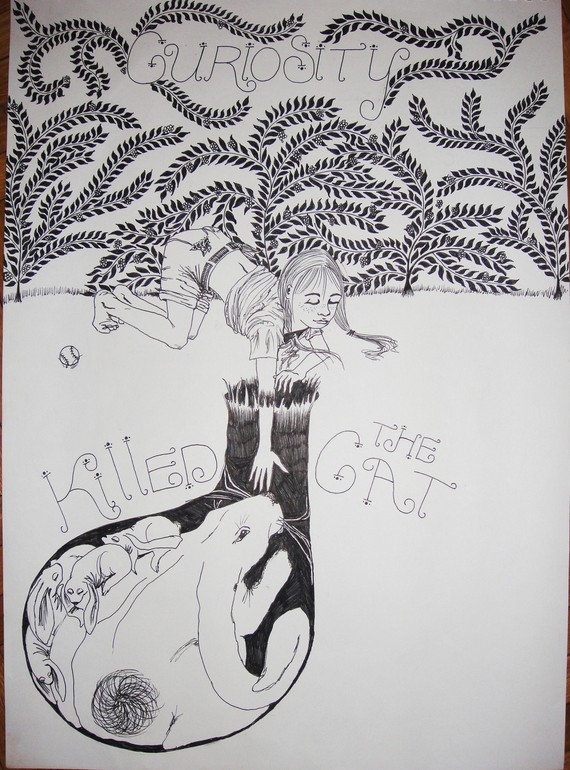

What started as a therapeutic hobby ended up being valuable in more ways than personal satisfaction. I can't believe how many new techniques I learned working on my Etsy pieces that I now apply to client work. I connected with other artists and found myself more in tune with the design community *outside* of advertising. And (as a bonus) it turned out to be lucrative when some prints ended up selling.
The fact is that when people stop doing what they *have* to do and start doing what they *want* to do, great stuff happens. Hobbies are fantastic vehicles for growth, especially when they are focused, deliberate, and involve something that you love. If you're reading this, advertising is probably your number one passion (or is at least pretty high up there), but what else inspires you and sparks creativity in your ads?
For the guys at Red Tettemer it was making gin. For Chicago-based designer John Christenson, it is self-made cheese and bread, ultra-marathons, and these amazing name puzzles, which are currently on my wish list.
Side projects aren't just limited to designers and art fans. My husband, Jack, is a biomedical engineer and general science enthusiast. When he’s not in the lab, he’s scouring innocentive.com for cool challenges to submit his ideas to. He feels that his proposal-writing skills have vastly improved thanks to his submissions.
It doesn't really matter what it is so long as in the end, you would be proud to discuss your experience and feel like you got something out of it.

The best side-projects in terms of being beneficial to your ad career loosely adhere to the below "rules":
- It is *shareable*. You have some kind of documentation that this side-project actually existed. Even better if that documentation tells a story.
- It is somehow *relevant* to your chosen path in the ad industry. Or it’s just mind-blowingly cool and creative.
- Potential for *growth*. Nothing is better than a success story of a passion turned into a phenomenon, so the more scalable your project the better. Try to think about "what's next" for your project so that it can grow along with you and your career.
Happy hobbying!
The Bronx & Their Mariachi Side Project
Today's guest post is from Energy BBDO brilliant-guy, Peter Carnevale.
This documentary, while not particularly well-made, shows a bit of what Greg and Jim seem to cover a fair amount on Makin' Ads: Doing something completely different creatively might make you better.
It's about a band, or more accurately, two bands. (Note: They are not everyone's cup of tea, but the bigger point remains.) The Bronx is a hardcore-ish punk-ish rock band. Mariachi el Bronx has the same members, plus a couple more, but they operate as two different bands. And yes, they perform in mariachi garb. The two bands are remarkably different, and the members discuss in this documentary how shifting gears completely has helped revitalize the creative process. Sound familiar?
I personally need to do more of this. I'd wager it would improve my work, and if nothing else, I'd probably enjoy the process.
Backstory of how Mariachi el Bronx came about: As I understand it, someone asked for an acoustic version of one of their songs for a compilation. They decided that they didn't like acoustic versions of hard rock songs, so they did a mariachi version instead and it snowballed from there. Pretty cool.
First Stop

Art directors, designers, creative directors, copywriters, print buyers--pretty much anyone in the creative department is inundated on a daily basis by paper promo mailers from photographers, illustrators and their reps. In the age of digital, it's a pretty antiquated way to reach people. Furthermore, all those trees could probably be put to much better use. CO2 reduction, for one. It's not that we don't love the samples we get--some of them are from the most talented artists in the business. It's just that we don't physically have place to store it all in our offices.
With that in mind, I've been helping a group of guys on a project that aims to chip away at this colossal waste of paper and money. We've created a site called first-stop.org that we hope will 1) be a good tool for creatives to search for photographers and illustrators--a kind of central directory, and 2) at least make photographers and their reps think twice about sending out paper mailers.
If you have time, please check it out. Send us feedback on the site and its functionality. What would be helpful to you? Feel free to sign up and submit work if you're an artist. It's completely free. And please spread the word. Thanks.
-jim
VISIT FIRST-STOP.ORG
Jim's 2010 Book List

Greg posted his 2010 Book List a few days ago.
Here's my list from the past year:
JIM'S 2010 BOOK LIST
Or if you just want the quick favorites, you can go here.
Please, let us know what you're reading and what you think of it. We're usually mostly about advertising on this blog, but if you want to get us talking for a really long time, bring up your favorite books.
The 2010 GRC Book List
Since 1998, I've kept a list of the books I read each year. In 2000, I emailed it out to a group of friends and got so many responses I've made it an annual event.
It might not have much to do with advertising or putting your book together, but I thought I'd share it here as well.
Here's the link to the 2010 list. Enjoy.
(Jim keeps a similar list. I'm sure he'll be posting his shortly.)
Subscribe to:
Posts (Atom)