The Accidental Creative by Todd Henry


I read a handful of books on creative thinking and management every year. Some are more helpful than others. The Accidental Creative by Todd Henry is one I found full of good advice from both perspectives. In a nutshell, Henry's focus is on practices that help us make the most of our creative resources (time and energy). It also has some good advice about managing a creative environment. 
My review is below, along with some random notes (I post reviews of everything I read on my personal blog). 

Additionally, Henry runs The Accidental Creative podcast. And he has a new book out, Die Empty. I haven't read that book. If anyone has, let me know what you think of it. The title's a little cheesy, but he usually has smart stuff to say. 

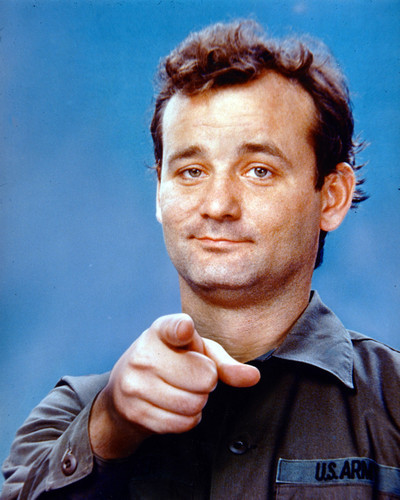
Bill Murray


I was going to add something else to the title of this post, like ":Creative Genius" or ":Master of the Unexpected," or ":God of Mt. Comedius," but if you need more than "Bill Murray," you should be kicked in the nuts.

I just finished this article about Murray in Rolling Stone. Please read it. My takeaway from it, broadly, is that the characteristics that make you a good creative person are the same characteristics that make you a good person. A fun, interesting person, at least.

In addition to some great stories, here are a few gems:

"Someone told me some secrets early on about living. You can do the very best you can when you're very, very relaxed. And I realized the more fun I had, the better I did." 

"Wear your wisdom lightly, so insights come as punchlines." 

On his famously bizarre/amazing interactions with the strangers: 
"My hope, always, is that it's going to wake me up. I'm only connected for seconds, minutes a day, sometimes. And suddenly, you go, 'Holy cow, I've been asleep for two days. I've been doing things, but I'm just out.' If I see someone who's out cold on their feet, I'm going to try to wake that person up. It's what I'd want someone to do for me. Wake me the hell up and come back to the planet." 

Pushing for cool.

Seems every time OK Go comes out with a new video I have to post about it.


What does this have to do with advertising? As I've written before, OK Go does a great job of surprising the viewer. That's what great advertising does. We say "That was cool." What we mean was, "That surprised me."

The band could have made this entire video about those Honda Uni-Cub scooters, and it would have been been pretty cool.

And that's where a lot of advertising creatives stop. We come up with one idea and say, "Cool. Let's do it."

But what OK Go did was say, "Cool. And then what?"

We take them outside the studio and ride around.

"Cool. And then what?"

We have a bunch of Japanese girls come dance around us.

"Cool. And then what?"

We film this with a drone to get a bird's eye view of us and the Japanese girls.

"Very cool. And then what?"

We make patterns that can only be seen from the drone's eye view.

"Cool. And then what?"

We incorporate umbrellas opening and closing to add some color.

"Cool. And then what?"

We use the umbrella's as pixels and create patterns only the drone could see.

"Very cool. And then what?"

Let's not just create patterns. Let's create images. And even text.


They could have just stopped at "Let's ride around on Honda Uni-Cub scooters."

And that's where most of us stop creatively.

But there's always more we can do.

Don't stop too early.

You've got to push for cool.


(On a side note, I just did my first shoot with a drone. Loved it. Shout out to Charlie Kaye, our drone pilot.)


What Makes a Great Creative Director?


3% Conference - What makes a great Creative Director? from Pitch on Vimeo.

These are the comments that stood out to me:

  • The best ones teach you to survive without them.
  • A nurturer.
  • Very decisive.
  • Have a point of view.
  • Hire people who are better than you.
  • Do no harm.
  • The allow the work and the teams behind them to grow.
  • Part of your making is helping other people make.
  • It has to be purely about the work.
The best creative directors I've worked for hit all of these points. How well does your current creative director stack up?

"What One Thing?" with Jon Lancaric

This is a part of an ongoing series that asks, “If you could go back to when you were just starting out in this business and give yourself one piece of advice, what would it be?” 


I’m biased. Jon Lancaric is a good friend of mine. He also happens to be an incredibly talented writer, director and creative director. He’s put in time at DDB, Mother NY, Chiat, Media Arts Lab, Google, Apple and more. He has won multiple Cannes Lions, among other awards. This was his answer.

Surround yourself with people who inspire you to be brave, take chances, and who challenge you to push your creativity beyond what it looks, feels and sounds like today. Relationships take time and energy. Spend them on the good ones, not fretting about the bad ones.

#lovemyjob

I came across this article by Liz Taylor on Medium.

It begins with this quote from Steve Jobs:


“Your work is going to fill a large part of your life, and the only way to be truly satisfied is to do what you believe is great work. And the only way to do great work is to love what you do.”


Read all of Liz's article.

It's great advice.

And put things into perspective.

"What One Thing?" with Luke Sullivan

I'm starting a series of posts that ask a simple question: "If you could go back in time to when you were starting out in this business, what one thing would you tell your younger self?" 


For the first one, I asked Luke Sullivan the question. Luke is an incredibly talented, wise, respected and beloved writer and creative director. He's the author of the canonical Hey Whipple, Squeeze This! He currently teaches and chairs the advertising department at the Savannah College of Art & Design.  Here's what Luke said: 

"The one thing I wish I coulda done different when I was a young ad geek, is to have shut up and listened more. Even if you’re fairly talented, just behave like like an apprentice oughta and learn from the journeymen and masters who surround you. I would tell me to quit gettin’ so bent out of shape every time one of your ideas gets axed. Deal with it. That’s how it is in every creative business. 98% of everything you ever come up with will die. The answer is to deal with it, shut up, sit down and come up with another idea. As they say, the best revenge is a better ad."


Technology and Creativity

There's a lot more technology in advertising than when I graduated from portfolio school with a book full of double-page print ads. And the great thing about technology is it lets so many of us become makers. But sometimes we get so excited about what we can do, we lose sight of what we're doing.

Keep your eyes open, be jealous and define your own insight.

[This is a special guest post from VCU Brandcenter's Caley Cantrell. Caley is Professor of Communications Strategy.This is another in a series of guest posts from Brandcenter faculty.]


I don’t blog much. Not for lack of things to write about. But for lack of sheer discipline. So joining in on someone else’s blog seems pretty delicious! Many thanks to Greg and Jim.


If I can offer advice to folks who might want to be account planners or strategic planners or brand planners (don’t get me started on titles) it would be these three things:

1. Keep your eyes open.
2. Be jealous.
3. Define your own insight.

Keep your eyes open. The world is full of things that are important for a strategist to be aware of. So much so that large parts of my classes, if not all my classes, are somehow bound to things I find in the newspaper, hear on NPR, or past students send me. Advertising and marketing do not exist and cannot succeed in a bubble. You must know the state of the economy. You should worry about the continuing digital divide. Buy movie tickets and see the movies when everyone is chatting about them. Don’t always wait for Xfinity.

Please don’t let your eyes be focused only on “what the consumer cares about." Back in the day, the job of the account planner was “to be the voice of the consumer.” I don’t know about you, but consumers have voice now and they are screaming. If you don’t believe me, visit Twitter, Facebook, Pinterest, blogs – you get the point. Anyway, study business. Study what models are sustainable, what models are failing and what models the jury is still out on.

Be jealous. If jealousy and envy are synonyms, that means jealousy is one of the 7 deadly sins. I hate to be recommending that anyone purposefully sin – but damn it to Hell – that’s what I’m going to do. When I go to a conference and hear a great speaker or watch a student presentation and think to myself “Whoa! They really nailed It.” or “How elegantly simple.” it’s a compliment that means I’m a little jealous. I wish I’d said that. I wish I’d done that. And in the case of a student, I’m pretty proud they did it. As a planner, being jealous of other planners makes me work harder. Tell a better story. Define a problem more clearly.

Define your insight. Someone I’m a bit jealous of is Farrah Bostic and because some say that people in planning, or advertising in general, have the magpie mind, I’m going to drag a shiny bit from Farrah to my nest and this post. Farrah has a great blog and posted about insights in a piece entitled “There are not such things asinsights.” Farrah is spot on. You don’t just “find” insights. Or as I tell Brandcenter folks, “insights are not sea shells that you collect while walking on the beach.” Googling faster and harder does not get you to insights.

I will also borrow from the good folks at The Challenger Project who talk about “fat words.” Fat words are ones we throw around and at each other so often that they become bloated with symbolic overuse and lose any real meaning. “Insight” has become such a word and I worry often about removing it from my syllabi forever.

So I’m going to take and define a new “I” word. INTEREST. What is of interest in this problem? What is interesting about how people live their lives? Can you create a conversation between a brand and a person by revealing a common interest

This “I” stuff is probably getting a little annoying right about now. So I’ll get to the point in my agreement with Farrah. An insightful person will realize that the really interesting bit of the assignment is reframing the problem. It is interpreting the difference between what people say and what they do. Your work should be illuminating from beginning to end – not just on the page with the bold title “INSIGHTS.”

Zzzzzzzzzzzzz.

You should know who Mark Fenske is.

Really.

If you don't, study more award annuals.

Here is one of his recent posts.

I wish I'd read it when I was in portfolio school.